BEIJING, May 24 (Xinhua) -- With soybean farmers caught in the middle of the trade conflicts between the world's top two economies, Chinese experts said there was much to be reflected upon for American policymakers, and a challenge for the domestic industry to rise to.
As the trade conflicts escalated with the U.S. administration imposing additional tariffs on 200 billion U.S. dollars of Chinese exports this month, American soybean farmers were more frustrated by the prolonged tariff fight.
To pacify domestic farmers, American politicians touted wishful ideas that customs revenues could be used as bailouts to purchase large quantities of farm produce from local farmers and then send them to needy countries in the name of humanitarian assistance.
FOOD-AID TRICK
Zhong Yu, a researcher with the Institute of Agricultural Economics and Development of the Chinese Academy of Agricultural Sciences, questioned its feasibility. "This 'food-aid' trick will utterly get nowhere," he said.
Ye Xingqing, a researcher with the Development Research Center of the State Council, echoed Zhong's view, as the World Trade Organization (WTO) has already included food aid in the framework of a new round of negotiations.
Under the Doha round negotiations, binding rules have been proposed to prevent the use of food aid as a means to dispose surplus grain, he noted.
"Using tariff income to buy agricultural products and conduct food aid actually violates the WTO Agreement on Agriculture," Ye said.
He explained that the agreement stipulates that food aid must not affect the production and trade of relevant farm produce worldwide or significantly impact market prices.
On the other side of the Pacific Ocean, American soybean farmers are unwilling to be collateral damage in the trade war, given that depressed prices and unsold stock is expected to double by the 2019 harvest.
"They are desperate to re-enter the Chinese market within a few weeks," said Davie Stephens, president of the American Soybean Association.
Liu Heguang, a researcher with the Chinese Academy of Agricultural Sciences, said that a major direct impact of the trade woe was the drastic decline in soybean exports to China, which could have been avoided if the U.S. politicians were not so obsessed with tariff hikes.
In 2018, China imported 16.64 million tonnes American soybeans, down 49.4 percent over the previous year and accounting for only 18.9 percent of its total imported soybeans. The proportion was 15.5 percentage points lower than that in 2017, Liu said in an interview with Xinhua.
As exports stumbled, American farmers earned less last year. The prices of soybeans and other farm produce dropped sharply, and many farms that produced relevant products have been in difficulties, said Ye Xingqing, a researcher with the Development Research Center of the State Council.
But American farmers are not the only ones bearing the brunt of the trade woe. Chinese agri-business is also making efforts to adapt to the challenge.
CHALLENGE FOR CHINA
Chinese experts said that the challenge could help China as it forces the country to diversify its imports and avoid excessive dependence on a certain market.
American soybeans have been mainly used for oil extraction, but the experts saw no causes for concern on soybean oil shortages, as domestic companies have taken various moves to rise to the challenge.
For instance, China has expanded its soybean imports from Brazil. Last year, China imported 66 million tonnes of Brazilian soybeans, up 30 percent from a year earlier.
Meanwhile, Sunflower seed and rapeseed from Argentina, Ukraine and Russia are making their way to the Chinese market as substitute products.
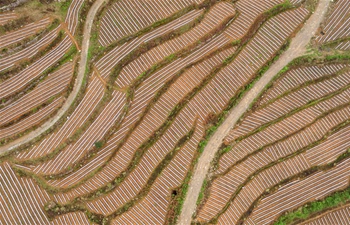
In addition, a program has been launched in China to encourage farmers to plant more soybeans.
Tu Changming, general director at Oils & Fats Trade Department of Yihai Kerry Group, said that China's soybean shortage would only be temporary.
"Once the country figures out new alternatives, it will be a fatal blow to the United States, as there will no longer be a market as big as China in the world," Tu said.