(China Economic Roundtable) Xinhua Headlines: Major provincial economies leveraging innovation prowess to fuel China's high-quality development

* China's major provincial economies are steadily consolidating the foundation of national economic stability while unleashing momentum for progress and delivering high-quality development.
* Ten provincial-level regions -- Guangdong, Jiangsu, Shandong, Zhejiang, Sichuan, Henan, Hubei, Fujian, Shanghai and Hunan -- contribute over 60 percent of China's GDP, even though they cover less than one-fifth of the country's land area.
* In the first two months of 2026, China's foreign trade surged 18.3 percent year on year to 7.73 trillion yuan. The 10 major provincial economies alone accounted for nearly 76 percent of this total.
BEIJING, April 20 (Xinhua) -- China's major provincial economies are steadily consolidating the foundation of national economic stability while unleashing momentum for progress, delivering high-quality development and expanding high-standard opening-up to fuel the country's overall growth.
These provinces are the locomotives of the world's second-largest economy. Ten provincial-level regions -- Guangdong, Jiangsu, Shandong, Zhejiang, Sichuan, Henan, Hubei, Fujian, Shanghai and Hunan -- contribute over 60 percent of China's GDP, even though they cover less than one-fifth of the country's land area.
In 2025, these economic powerhouses posted a combined GDP of over 85.5 trillion yuan (about 12.45 trillion U.S. dollars). To put it in perspective: Hunan, which ranks 10th among them, has a GDP larger than that of the entire country of Sweden or Austria.
During the latest episode of China Economic Roundtable, an all-media talk show hosted by Xinhua News Agency, guests discussed how these provinces are spearheading the nation's 15th Five-Year Plan (2026-2030) by embracing new quality productive forces and opening up more widely to the world.

ECONOMIC BALLAST AND NEW FORCES
Major provincial economies serve as both a ballast for stability and an engine for growth. Liu Zhicheng, a researcher at the Chinese Academy of Macroeconomic Research, said that on the supply side, they are the birthplace of new business forms and new quality productive forces, while on the demand side, their vast investment and consumption markets drive the national economy.
In the first two months of this year, the growth rate of industrial output above a designated size in most major provinces was higher than the national average, with Zhejiang achieving a rapid growth of 9.8 percent.
Meanwhile, Guangdong's computer, communication and electronics manufacturing surged 14.2 percent year on year, while Shandong and Jiangsu posted over 10 percent growth in equipment manufacturing.
"Major provincial economies should leverage their solid foundation to enhance the overall resilience of the national economy and support overall stability," Liu said. "In terms of technological innovation, they should act as 'locomotives' and take the lead in developing new quality productive forces. By integrating technological and industrial innovation, they can strengthen competitiveness and better deal with external uncertainties."
For example, Jigang Group, once a major steel producer in Jinan, the capital of Shandong Province, has rolled out its first satellite. The company plans to produce at least 20 more satellites this year.
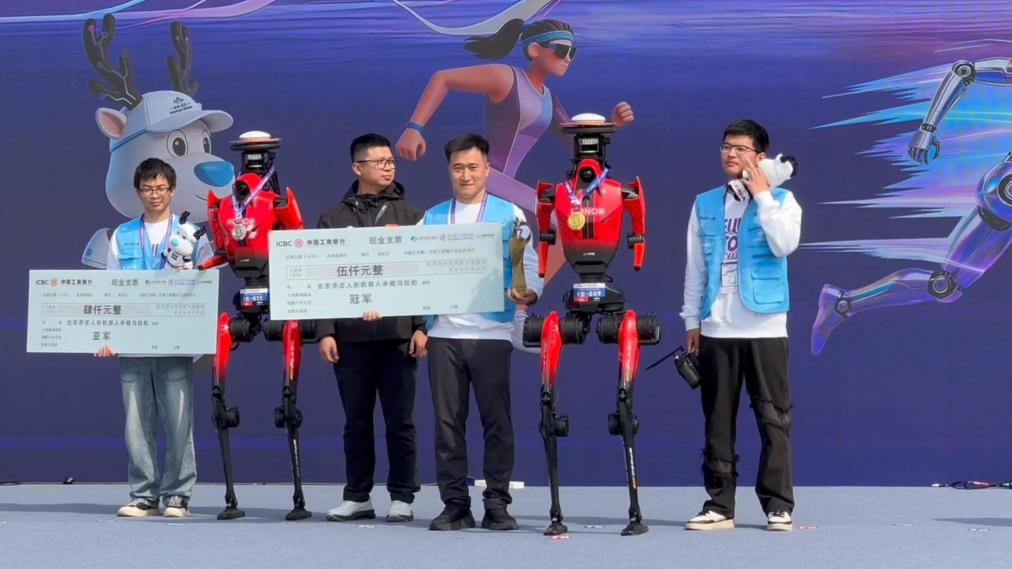
In Shanghai's future brain-computer interface (BCI) industry cluster, more than 30 BCI companies have registered, covering key areas such as BCI chips and vision restoration. Guangdong has launched the country's first automated humanoid robot production line with an annual capacity of 10,000 units. Zhejiang is also building up its full aerospace industry chain.
Their innovation strength has gained global recognition. The Shenzhen-Hong Kong-Guangzhou innovation cluster topped the World Intellectual Property Organization's 2025 Global Innovation Index for the first time.

Liu Wenqiang, vice president of China Center for Information Industry Development, said major provinces should attach great importance to transforming and upgrading traditional industries, making them smarter, greener, and more integrated to unlock existing advantages. "At the same time, we need to accelerate the development of emerging and future industries, and build a number of future industry pilot zones to foster core momentum from new quality productive forces."
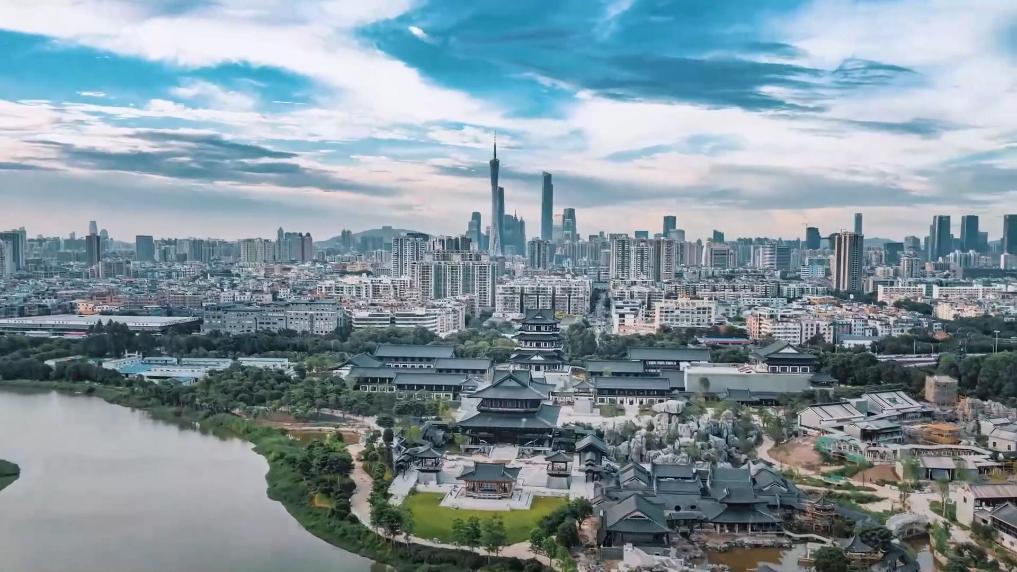
Guangdong, in its practice of shouldering major responsibilities, has leveraged its own resource advantages and development realities to deepen the construction of the Guangdong-Hong Kong-Macao Greater Bay Area, said Wu Zuyan, president of Guangdong Provincial Development and Reform Research Institute, noting that the area's economy surpassed 15 trillion yuan in 2025, boasting 10 industrial clusters each worth over a trillion yuan.
"We should encourage major provincial economies to increase the supply of factors such as application scenarios, data and computing power to provide solid support for building a modern industrial system," said Wu.
If major provincial economies successfully shoulder the heavy lifting, they can drive overall progress through a single sector, promote comprehensive development through breakthroughs in key areas, and continuously open up new prospects for Chinese modernization, Liu Zhicheng added.
OPENING-UP PACESETTERS
China's economic powerhouses are also test beds for institutional opening-up. They have introduced innovative measures to optimize customs clearance procedures and support cross-border e-commerce. These steps have reduced burdens and boosted vitality for foreign trade enterprises, helping China's foreign trade make a good start.
In the first two months of 2026, China's total goods trade surged 18.3 percent year on year to 7.73 trillion yuan. The 10 major provincial economies alone accounted for nearly 76 percent of this total.
At Zhanjiang Port in Guangdong, a "smart inspection" system uses near-infrared spectrometers and high-speed image recognition. This system has cut the average customs clearance time for iron ore by 15 hours.
Multinationals are also showing confidence through their investments. On March 26, BASF's 8.7-billion-euro Verbund site in Zhanjiang -- the German chemical giant's largest single investment project wholly owned by a German enterprise in China -- went fully operational. Guangdong province held regular high-level meetings to solve problems the project's construction, and Zhanjiang slashed approval time to 26 days.

A commerce ministry spokesperson noted that for many multinationals, investing in China has evolved from a "nice-to-have" option to a strategic "must-have."
China's rail links to Europe are also expanding. On March 31, the first Wuhan-Baku China-Europe freight train departed, using a rail-sea intermodal route that cuts delivery time by two-thirds compared to traditional shipping. Wuhan, in central China, now operates 63 stable cross-border routes covering 124 cities in 42 Eurasian countries.
Moreover, leveraging its strength as an international shipping center, Shanghai is deepening trade ties with Belt and Road partner countries through the coordinated operation of China-Europe freight trains and ocean shipping routes. Guangdong is strengthening cooperation with local enterprises in ASEAN and Central Asian markets to jointly explore optimal development paths.
Experts noted that major provincial economies must continue deepening reform and opening-up, accelerate the creation of an "institutional highland," and proactively align with high-standard international economic and trade rules.
As the 15th Five-Year Plan gets underway, China's economic heavyweights are not just carrying the nation -- they are helping stabilize global supply chains and inject vitality into the world economy. ■








Comments